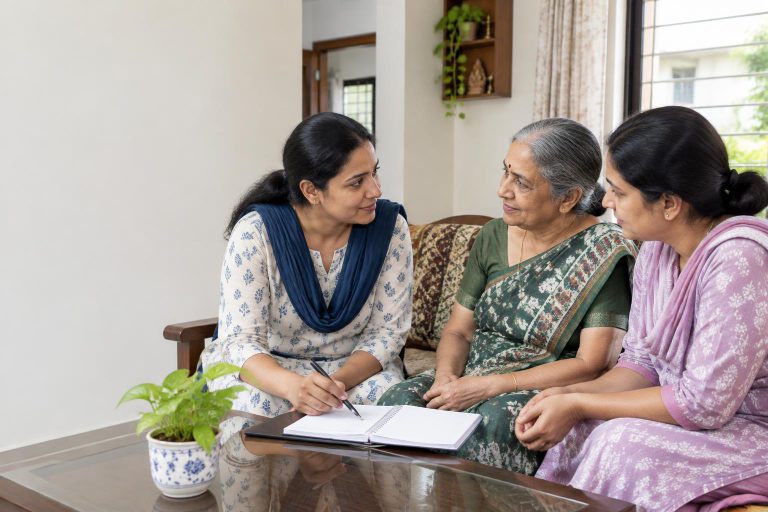
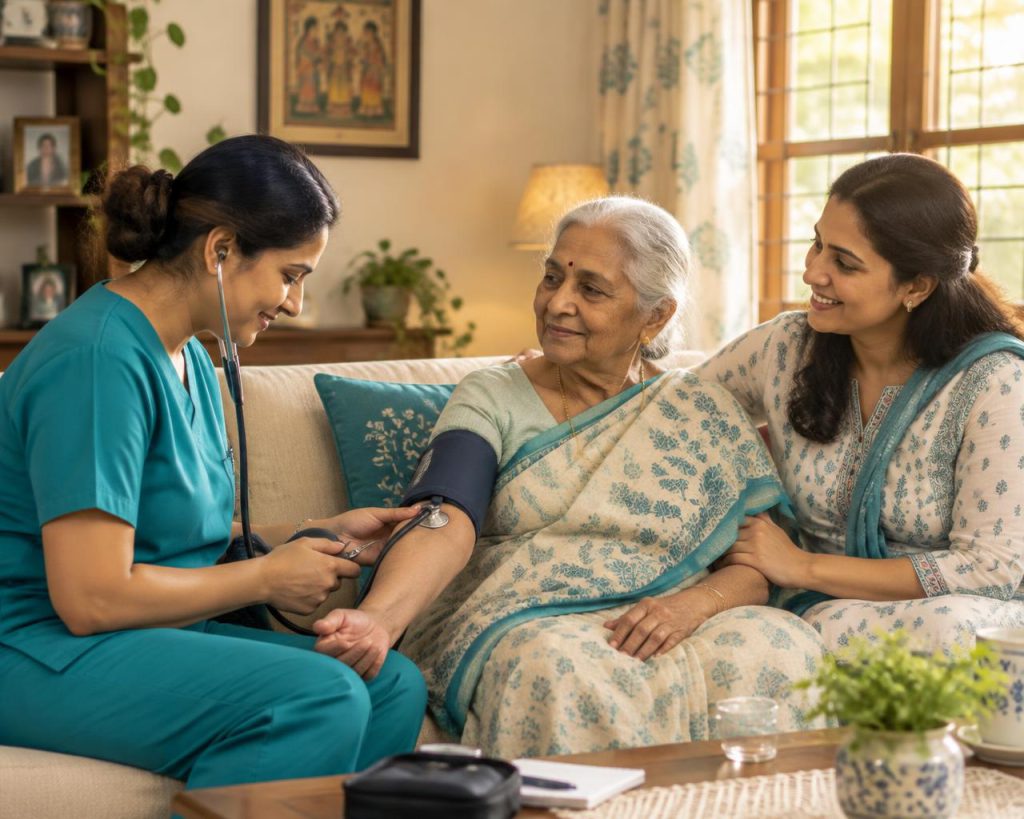
Diabetes management changes significantly as our parents age. Hypoglycaemia (low blood sugar) poses a far greater immediate risk of falls and confusion than moderate high blood sugar. Here is a compassionate guide to daily glucose monitoring, diabetic foot care, and dietary balance for ageing seniors.
The Danger of Silent Hypoglycaemia
In elderly individuals, classic warning signs of low blood sugar like sweating or trembling may be absent. Instead, hypoglycaemia often masquerades as sudden dizziness, confusion, or unsteady gait — drastically increasing the risk of catastrophic hip fractures.
Essential Daily Protocols
- Scheduled Blood Sugar Logs: Fasting and post-prandial testing recorded in a consistent digital ledger.
- Foot Examinations: Inspecting between toes for redness, blisters, or cracking, paired with gentle moisturization.
- Hydration Monitoring: Encouraging measured water intake throughout the day to support kidney function.