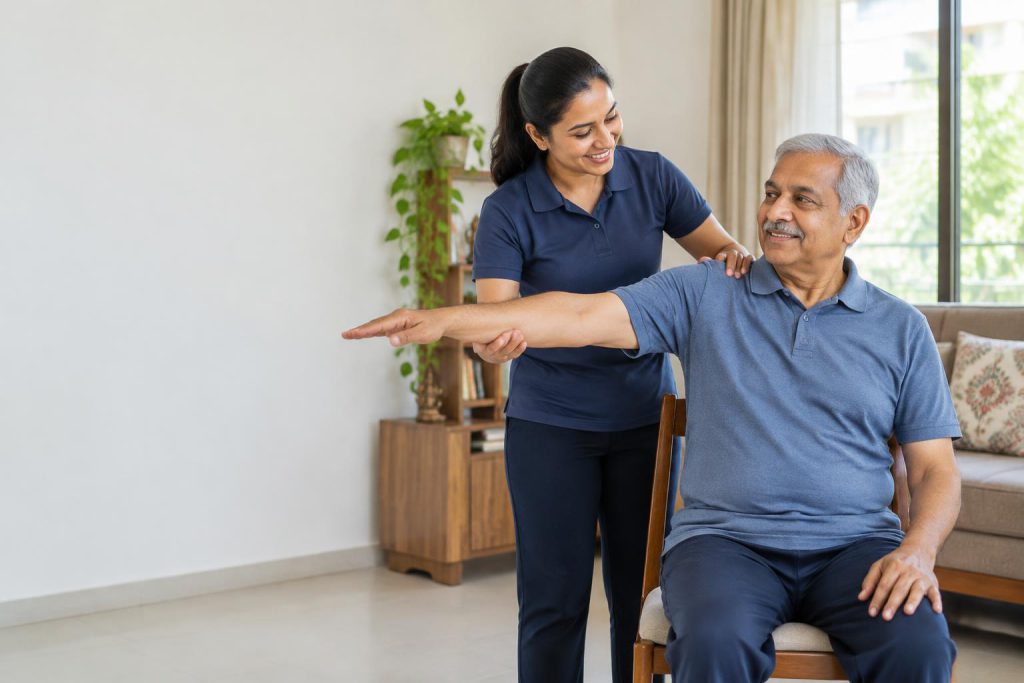
Recovering from a stroke is a long and delicate journey that requires dedicated physical, clinical, and emotional support. For families in Gujarat caring for a stroke survivor at home, the first few weeks after hospital discharge can feel overwhelming. This guide outlines the essential steps to create a safe home environment, coordinate regular physiotherapy, manage medications, and support your loved one’s rehabilitation.
Understanding the Recovery Window
Neuroplasticity — the brain’s remarkable ability to rewire itself after damage — is at its peak during the first three to six months following an ischemic or haemorrhagic stroke. Consistent, guided rehabilitation during this period yields the greatest long-term functional gains.
Key Home Care Priorities
- Scheduled Physiotherapy: Daily exercises targeted at motor function recovery, gait retraining, and spasticity management.
- Medication Adherence: Strict compliance with antiplatelet, antihypertensive, and statin regimens to prevent secondary stroke events.
- Aspiration & Swallowing Precautions: Thickened fluids and upright posture during meals if dysphagia is present.
- Skin & Pressure Area Care: Frequent repositioning and specialized pressure-relieving mattresses for bedbound patients.
Coordinating Professional Support
Rather than managing nurses, physiotherapists, and medical equipment independently, partnering with a unified home care team provides families with peace of mind and continuity of clinical documentation.
Frequently Asked Questions
How often should a physiotherapist visit post-stroke?
In the initial 4 to 8 weeks after discharge, 3 to 5 supervised physiotherapy sessions per week are strongly recommended, accompanied by daily prescribed family-assisted exercises.
What warning signs require immediate emergency care?
Remember FAST: Facial drooping, Arm weakness, Speech difficulty, and Time to call emergency services. Any sudden change in consciousness or new neurological deficit demands immediate hospital evaluation.