When a family member takes on the role of primary caregiver for an elderly parent, the emotional and physical weight builds quietly. Over months, it becomes exhaustion. Over years, it becomes burnout — a state of chronic stress that leaves caregivers depleted, detached, and unable to provide the care they want to give.
Caregiver burnout is recognised by medical professionals as a serious condition. It is not a sign of weakness or a lack of love. It is what happens when too much is demanded of one person for too long, with too little support.
What Is Caregiver Burnout?
When you’re caring for an elderly parent, everyone asks “how is Baba?” — nobody asks how you are. The hidden patient in almost every home with chronic illness is the person giving the care.
Warning Signs to Watch For
Physical signs
- Persistent fatigue that sleep doesn’t fix
- Getting sick more often than usual
- Neglecting your own health appointments
- Changes in weight, sleep patterns, or appetite
Emotional signs
- Feeling resentful or guilty — often at the same time
- Losing interest in things you used to enjoy
- Feeling isolated or cut off from friends and family
- Snapping at the person you’re caring for — and then feeling ashamed
Why It Happens in India
India’s home healthcare sector is 98% unorganised. There is no reliable, verified system most families can turn to. This leaves the burden almost entirely on one or two family members — often a daughter-in-law, a working son, or an NRI child managing everything from abroad.
What Families Can Do
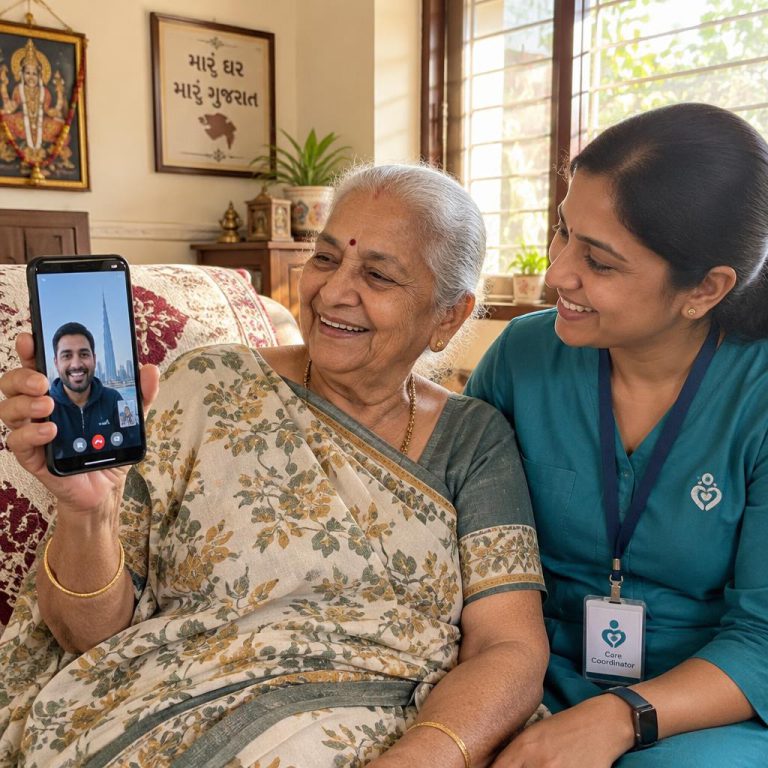
The most important shift is moving from “I must do everything” to “I need a team.” Professional home care — nurses who visit regularly, a care coordinator who manages appointments and records, a physiotherapist who handles mobility — takes the clinical burden off the family’s shoulders so they can return to being a family member, not a full-time medical aide.
Frequently Asked Questions
Is caregiver burnout the same as depression?
They share many symptoms but are not the same condition. Burnout is specifically linked to the caregiving role and often resolves when care burden is reduced. Depression is a separate clinical diagnosis. If you're unsure, speak to a doctor — both are real and both deserve proper attention.
Can a professional care team fully replace family care?
No — and that's not the goal. Professional home care handles the clinical tasks: nursing, physiotherapy, doctor visits, medication management. This frees the family to be emotionally present without carrying the medical burden. The best outcomes happen when both work together.
How do I talk to my family about needing help?
Frame it around your parent's wellbeing, not your own limits. "I want Ma to have the best care possible — and that means bringing in professionals who do this every day" is easier for families to hear than "I can't do this anymore." Both are true. The first is easier to act on.